
Tech discussions online often revolve around a small group of companies that dominate innovation, hiring, and influence in the software industry. For years, one acronym kept appearing in conversations about top technology employers: FAANG. Students preparing for software engineering careers, investors watching tech stocks, and developers exploring career paths frequently refer to FAANG companies as the most desirable organizations in the industry.
However, many people notice something surprising when they look at that list. One of the largest and most influential technology companies in the world is missing. Microsoft does not appear in the traditional FAANG acronym, even though it has shaped the global tech landscape for decades.
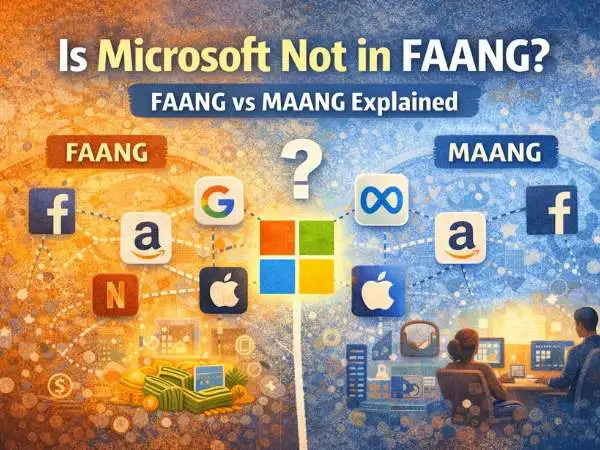
This raises a common question: why is Microsoft not included in FAANG? To answer that question, it helps to understand where the acronym came from, how it evolved over time, and why many professionals now use the term MAANG instead.
ALSO READ : – Why Is My MacBook Screen Black? How to Fix It (Step-by-Step Guide)
What Does FAANG Mean?
The acronym FAANG originally referred to five major technology companies:
- Amazon
- Apple
- Netflix
The term was first popularized by television personality and investor Jim Cramer in the early 2010s. At the time, these five companies were experiencing extremely rapid growth in stock value and user adoption.
The purpose of the acronym was originally related to stock market performance rather than engineering culture. Investors used FAANG to describe technology companies that were dominating digital markets and driving major gains in the U.S. stock market.
Over time, the term took on a new meaning within the technology community. Engineers and job seekers began using FAANG to describe companies known for high salaries, large-scale infrastructure, and challenging technical interviews.
But the acronym still reflected its original stock-market roots.
Why Microsoft Was Not Included in FAANG
When the FAANG acronym first appeared, Microsoft was already an established giant in the technology industry. However, the company was in a different stage of its growth cycle compared with the younger internet companies dominating headlines.
During the early 2010s, companies like Facebook and Netflix were expanding rapidly into new digital markets. Investors viewed them as high-growth internet platforms capable of transforming social media, entertainment, and online commerce.
Microsoft, by contrast, was perceived at the time as a mature enterprise software company. Its revenue came largely from products like Windows, Office, and enterprise licensing agreements.
While Microsoft remained enormously profitable, the narrative around Silicon Valley innovation during that period focused more heavily on newer internet platforms.
Because the FAANG acronym originated from investor discussions about high-growth tech stocks, Microsoft was simply not part of that original grouping.
ALSO READ : – Amazing Apps for Amazon Fire Stick: Top 10 Must-Haves for Ultimate Entertainment
The Rise of MAANG
Years later, the FAANG acronym changed slightly.
In 2021, Facebook rebranded itself as Meta Platforms. After that change, the acronym FAANG technically no longer matched the company names.
Many analysts began using a modified version: MAANG.
The MAANG acronym represents:
- Meta
- Amazon
- Apple
- Netflix
The change updated the original acronym but did not alter the companies included.
Still, the question remained: where does Microsoft belong?
Why Microsoft Is Often Compared to FAANG Companies
Even though Microsoft is not part of the FAANG or MAANG acronyms, it is often discussed alongside those companies.
The reason is simple: Microsoft competes directly with them in many areas of technology.
For example, Microsoft operates massive cloud infrastructure through Microsoft Azure, competing with Amazon Web Services and Google Cloud Platform.
It also develops widely used developer tools, enterprise software, operating systems, gaming platforms, and artificial intelligence technologies.
In many ways, Microsoft’s influence rivals or exceeds that of some FAANG companies.
From a hiring perspective, the company is also considered one of the most prestigious destinations for software engineers.
ALSO READ : – Ad Blocker for iPhone: Say Goodbye to Pop-Ups and Trackers
Microsoft’s Position in the Modern Tech Industry
Under the leadership of Satya Nadella, Microsoft experienced a major transformation. The company shifted its strategy toward cloud computing, enterprise platforms, and artificial intelligence.
This change dramatically increased Microsoft’s market value and industry influence.
Today, Microsoft ranks among the largest companies in the world by market capitalization. Its products support millions of developers, businesses, and consumers across the globe.
Major platforms such as Windows, Microsoft Office, and Azure remain foundational tools for modern computing.
Because of this scale, many engineers consider Microsoft just as important as any FAANG company.
FAANG vs MAANG vs Big Tech
Over time, many people realized that acronyms like FAANG or MAANG only represent a portion of the technology ecosystem.
Several other companies play equally important roles in the global tech industry.
For example, organizations such as Microsoft, Tesla, and NVIDIA have enormous impact across artificial intelligence, computing infrastructure, and digital services.
Because of this broader landscape, the term “Big Tech” is often used instead of relying on acronyms.
Big Tech generally refers to the largest and most influential technology companies shaping modern computing, including Microsoft.
Why Engineers Still Talk About FAANG
Despite the changes in the tech industry, the FAANG acronym remains widely used within developer communities.
One reason is convenience. The acronym became shorthand for companies known for challenging interviews, high compensation, and large-scale engineering problems.
Another reason is cultural momentum. For years, job preparation platforms and online forums used the FAANG label when discussing interview preparation or career goals.
As a result, the term remains deeply embedded in tech culture even though it does not perfectly reflect the modern industry landscape.
In practice, many engineers now informally include Microsoft when discussing top-tier technology employers.
The Reality of the FAANG vs MAANG Debate
When people ask whether Microsoft belongs in FAANG, they are really asking a broader question about influence in the technology sector.
From a business perspective, Microsoft clearly ranks among the most powerful technology companies in the world. Its products power operating systems, enterprise software, gaming platforms, and cloud infrastructure used globally.
From a hiring perspective, Microsoft offers opportunities comparable to those at FAANG companies in terms of salary, technical challenges, and career growth.
The difference lies mainly in the origin of the acronym rather than in the company’s importance.
In practical terms, Microsoft sits comfortably among the top technology organizations shaping modern software development.
ALSO READ : – Basic Calculator Online Free — The Everyday Tool You Didn’t Know You Needed
Final Thoughts
The FAANG acronym began as a term used by investors to describe high-growth internet companies dominating the stock market. Because Microsoft was already an established enterprise software company at the time, it was not included in the original grouping.
Later, the acronym evolved into MAANG after Facebook became Meta. Even then, Microsoft remained outside the acronym despite its enormous influence in the technology industry.
Today, many engineers and analysts treat Microsoft as part of the broader Big Tech ecosystem alongside companies like Meta, Amazon, Apple, Netflix, and Google.
In reality, the labels matter less than the impact these companies have on global technology. Microsoft continues to shape the future of computing through cloud services, developer tools, and artificial intelligence.
Whether or not it appears in an acronym, its place among the most important technology companies in the world is undeniable.
Frequently Asked Questions
Why is Microsoft not in FAANG?
The FAANG acronym originally described high-growth internet stocks and did not include Microsoft at the time it was created.
What does MAANG stand for?
MAANG refers to Meta, Amazon, Apple, Netflix, and Google.
Is Microsoft considered Big Tech?
Yes. Microsoft is widely considered one of the most influential companies in the global technology industry.
Do FAANG companies pay more than Microsoft?
Compensation levels are often similar across these companies, especially for experienced software engineers.
Is Microsoft as prestigious as FAANG companies?
Yes. Microsoft is widely respected in the technology industry and offers comparable career opportunities.